
5 Common Social Media Mistakes
In today’s digital marketing era, social media is one of the most powerful tools small businesses can use to attract, engage, and convert customers. However, many small businesses fall into avoidable traps that weaken their online presence. In this blog, we’ll cover the most common social media mistakes, why they happen, and how you can avoid them to maximize your marketing impact.
1. Lack of a Clear Strategy and Goals
The Mistake: Many small businesses post randomly without a structured plan. This lack of clarity leads to inconsistent messaging and wasted effort.
The Fix: Define your target audience, set measurable goals (such as increasing brand awareness, generating leads, or boosting sales), and create a content calendar aligned with your objectives.
2. Inconsistent Posting
The Mistake: Posting too little—or too much—confuses your audience and reduces brand visibility. Sporadic posting fails to build a loyal following.
The Fix: Maintain a realistic schedule. For example, posting 3–4 times per week consistently is better than spamming one week and going silent the next. Consistency builds trust and familiarity.
3. Neglecting Audience Engagement
The Mistake: Treating social media as a one-way street and ignoring comments or messages makes your brand appear distant.
The Fix: Respond to followers, ask questions, and encourage conversations. Social media is a two-way communication channel—use it to build relationships, not just push content.
4. Overly Promotional Content
The Mistake: Posting only about your products or services can turn followers away. Social media users want value, not just advertisements.
The Fix: Follow the 80/20 rule—80% engaging, entertaining, or informative content, and 20% promotional. Share customer stories, tips, and behind-the-scenes updates alongside sales posts.
5. Ignoring Analytics and Data
The Mistake: Many small businesses never review analytics, missing out on critical insights about their audience and performance.
The Fix: Use tools like Facebook Insights, Instagram Analytics, or Google Analytics to track engagement, clicks, and conversions. Data-driven strategies always outperform guesswork.
Social Media Marketing Mistakes Examples
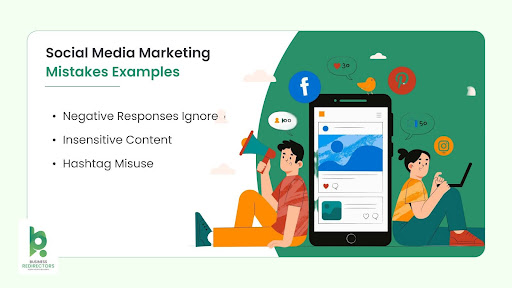
Here are a few real-world social media marketing mistakes examples to learn from:
- Negative Responses Ignored: A restaurant ignoring bad reviews on Facebook ended up losing credibility.
- Insensitive Content: A fashion brand posting irrelevant memes during a social crisis faced backlash for being tone-deaf.
- Hashtag Misuse: Companies that use trending hashtags without context (just for visibility) often look unprofessional.
Learning from these examples can help small businesses avoid costly missteps.
Social Media Mistakes by Companies
Even large organizations make social media mistakes:
- Pepsi’s Controversial Ad Campaign: Received criticism for trivializing social issues.
- United Airlines: A delayed response to a viral customer incident caused long-term damage to their reputation.
- McDonald’s Tweet Mishap: An unfinished promotional tweet accidentally went live, showcasing lack of quality checks.
These cases prove that no business is immune—but small businesses can learn and avoid repeating them.
FAQs
Q1: What are the 5 P’s of social media?
The 5 P’s are Plan, Produce, Publish, Promote, and Prove. They help businesses structure content effectively and measure results.
Q2: What is the single biggest mistake small businesses make?
The biggest mistake is operating without a clear strategy. Posting without goals or direction wastes time and delivers little return.
Q3: How often should small businesses post on social media?
Consistency matters more than frequency. Ideally, 3–5 posts per week with regular engagement is effective for most platforms.
Q4: Which platforms should small businesses focus on?
It depends on your audience. For example, Instagram and Facebook work best for retail and lifestyle businesses, while LinkedIn is ideal for B2B companies.
Q5: How can I measure if my social media is working?
Track engagement rates, reach, clicks, conversions, and follower growth. Use platform analytics or tools like Hootsuite to measure performance.
Conclusion
Avoiding these common social media mistakes can make a huge difference in how small businesses connect with their audience and grow online. By setting clear goals, posting consistently, engaging authentically, balancing promotional content, and leveraging analytics, you create a social presence that builds trust and drives results. Even big brands have made costly errors, but small businesses can learn from those examples and stay ahead by being intentional and customer-focused.
In short, social media is more than just a platform to post—it’s a tool to build lasting relationships and grow your brand. If you want your small business to thrive in today’s competitive digital landscape, take the time to refine your strategy, avoid these pitfalls, and use social media as a long-term growth engine.
At Business Redirectors, we help small businesses avoid these pitfalls with smart strategies that maximize growth and engagement.